
Turkish Football Vocabulary: 250+ Words to Follow the World Cup Like a Local
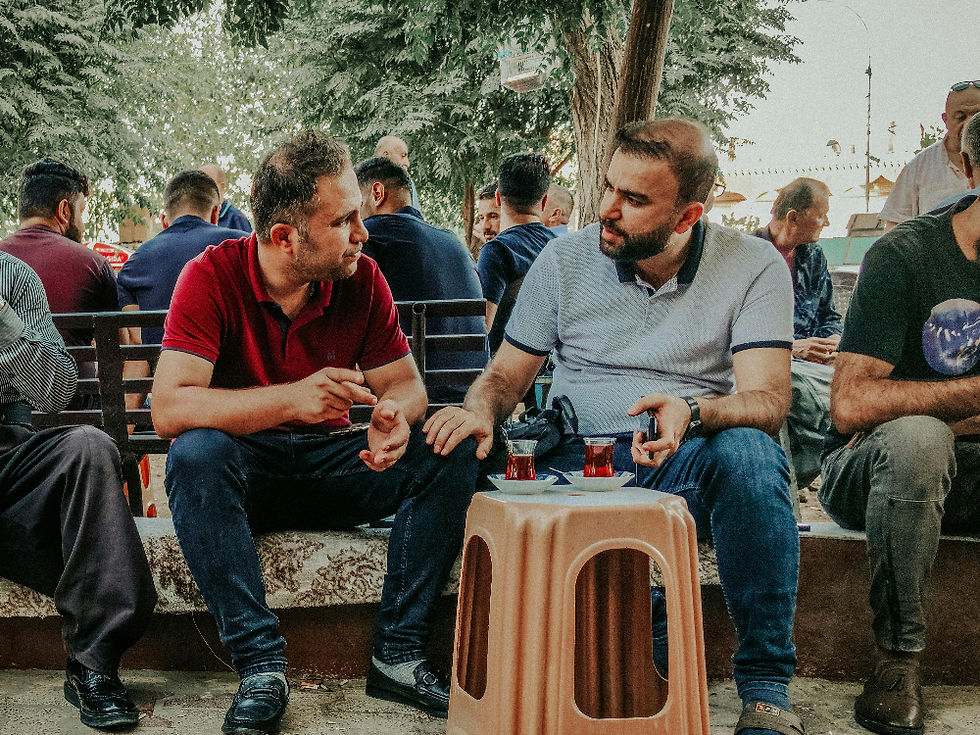
If you've ever sat in a kahvehane in Istanbul on a Sunday evening, you already know. The clinking of tea glasses stops. Conversations pause mid-sentence. Every pair of eyes locks onto the screen mounted on the wall. A goal goes in, and the entire neighborhood erupts, from the barber next door to the grandmother watching from her balcony. Football in Türkiye isn't a hobby. It's a language, a religion, and a rite of passage. If you're a foreigner learning Turkish, it will very likely be the first cultural door that opens for you.
"Hangi Takımı Tutuyorsun?" The Question You Can't Escape
Ask any expat or exchange student what the first question they were asked in Türkiye was, and chances are it wasn't "Where are you from?" It was "Hangi takımı tutuyorsun?", which team do you support?
This isn't small talk. This is identity. In Türkiye, your football team says something about who you are, where your family is from, and what kind of person you are. The üç büyükler, the Big Three of Galatasaray, Fenerbahçe, and Beşiktaş, divide households, friendships, and even marriages. Children inherit their team the way they inherit their surname. You don't choose Galatasaray. You're born into it. Or Fenerbahçe. Or Beşiktaş. And each one comes with its own colors, mascots, chants, and a fierce tribalism that makes English Premier League rivalries look like polite disagreements.
So when a Turk grabs you by the arm and teaches you to say "Fenerbahçe!" or shows you how to clap to a Beşiktaş marş, they're not just teaching you a word. They're inviting you into their world. Turkish football vocabulary is, for many foreigners in Türkiye, the first real Turkish they learn, and the first Turkish they actually want to learn.

2002: The Summer That Changed Everything
To understand why the FIFA World Cup means so much to Turkish people, you have to go back to 2002. Türkiye had never been a serious contender on the world stage. Then came Korea-Japan, and everything changed.
That golden generation, İlhan Mansız, Rüştü Reçber, Ümit Davala with his unforgettable mohawk, Hasan Şaş lighting up the wings, captured the hearts of an entire nation. They beat co-hosts Japan, they beat Senegal, and they marched all the way to the semifinals before falling 1-0 to Brazil, the team that would go on to lift the trophy. In the third-place match against South Korea, Türkiye struck with the fastest goal the World Cup had ever seen: just eleven seconds after kickoff, the ball was in the net. That record still stands today.
Türkiye finished third in the world. Third. For a country that had barely been on the global football map, it was nothing short of a miracle. The streets flooded with red and white. Car horns didn't stop for days. That summer wasn't just a sporting achievement. It was a moment of collective national pride that an entire generation still carries with them.
And then came the song.

"Arar Buluruz İzini, Bilirsin Zır Deliyiz Biz"
If 2002 had an anthem, it was Tarkan's Bir Oluruz Yolunda. The song became inseparable from that World Cup run, a rallying cry that blasted from every speaker in every street. The chorus, "Arar buluruz izini, bilirsin zır deliyiz biz" (roughly, "We'll track down every trace of it, you know we're absolutely crazy"), captured the reckless, all-or-nothing spirit of Turkish football fandom perfectly.
Even today, more than two decades later, those opening notes trigger an instant emotional response in anyone who lived through that summer. It's Türkiye's unofficial football anthem, and it still gets played before big matches, at fan gatherings, and in every compilation video about 2002. Tarkan didn't just write a pop song. He bottled lightning.
24 Years Later: Türkiye Is Back at the World Cup
After 2002, the national team spent twenty-four years in the wilderness. Five consecutive World Cups came and went without Türkiye. An entire generation grew up watching the tournament as outsiders, carrying the memory of 2002 but never getting to experience their own chapter.
That changed on March 31, 2026, when Türkiye won their UEFA playoff to qualify for the World Cup in North America. The scenes in cities across the country were reminiscent of 2002: flag-waving caravans, fireworks, strangers hugging in the streets. The 24-year wait was over.
Now, under Italian coach Vincenzo Montella and captained by Inter Milan's Hakan Çalhanoğlu, the Crescent-Stars are back on the biggest stage. The squad is a blend of battle-tested experience and electrifying young talent. Arda Güler, the 21-year-old Real Madrid playmaker who wasn't even born the last time Türkiye played in a World Cup, and Kenan Yıldız from Juventus represent the next generation of Turkish football.
Drawn in Group D alongside the United States, Australia, and Paraguay, Türkiye's opening match on June 14 didn't go to plan: a 2-0 loss to Australia in Vancouver, despite dominating possession with 62% and firing 30 shots on goal. It was a frustrating start, but anyone who knows Turkish football knows that writing off this team after one result is a mistake. The coşmak, that raw, fired-up energy, hasn't gone anywhere. With matches against Paraguay and co-hosts USA still to come, the story of this World Cup is far from written.
You can also watch highlights from TRT Spor's YouTube Channel in Turkish commentary to practice listening!
Why Learning Turkish Football Vocabulary Matters
Here's the thing most textbooks won't tell you: if you want to connect with Turkish people, learn their football language. Not just gol and maç, but the real stuff. Know that kaleci means goalkeeper and forvet means striker. Know that when a commentator shouts "Top ağlarla buluştu!" it means the ball just hit the net. Know that milli olmak (literally "to be a national athlete") means to lose virginity (I know it is crazy!). Know that calling a player kazma (a pickaxe) is an insult to their technique, and that bacak arası is a nutmeg.
This is the vocabulary that earns you a seat at the table. When you can follow a match on Turkish TV, shout "Hakem görmüyor mu?!" at the screen, or debate whether Galatasaray's Cimbom or Fenerbahçe's Kanarya had a better transfer window, that's when you stop being a tourist in the language and start becoming a participant.
Download Your Complete Turkish Football Vocabulary Sheet
To help you get there, we've put together a comprehensive vocabulary sheet that covers everything you need to follow the game in Turkish. It's called Turkish Futbol Words for Real Life, and it's packed with over 250 words and phrases across ten sections: pitch positions and formations, field and equipment terminology, match actions and verbs, set pieces and match flow, competition and tournament vocabulary, Süper Lig club culture with all the major teams and their colors and mascots, fan culture and stadium chants, real commentary phrases you'll hear on TV, football slang that no textbook will teach you, and even injuries and VAR technology terms.
Whether you're watching the World Cup this summer, following the Süper Lig season, or just trying to survive a football conversation at a Turkish dinner table, this resource has you covered. You'll find it right below this article, ready to download and study.
Because in Türkiye, football isn't just the beautiful game. It's the first conversation. And now, with the Crescent-Stars back on the world stage for the first time in twenty-four years, there has never been a better time to learn the language of the game.


Comments